When a dentist quotes thousands of dollars for replacing missing teeth, university clinics and dental research may seem like an alternative. Our national dental assistance hub explains other public and nonprofit care pathways, and our donated dental services application article separates genuine charity care from private discounts. This page focuses on teaching programs, university specialty clinics and properly registered research studies.
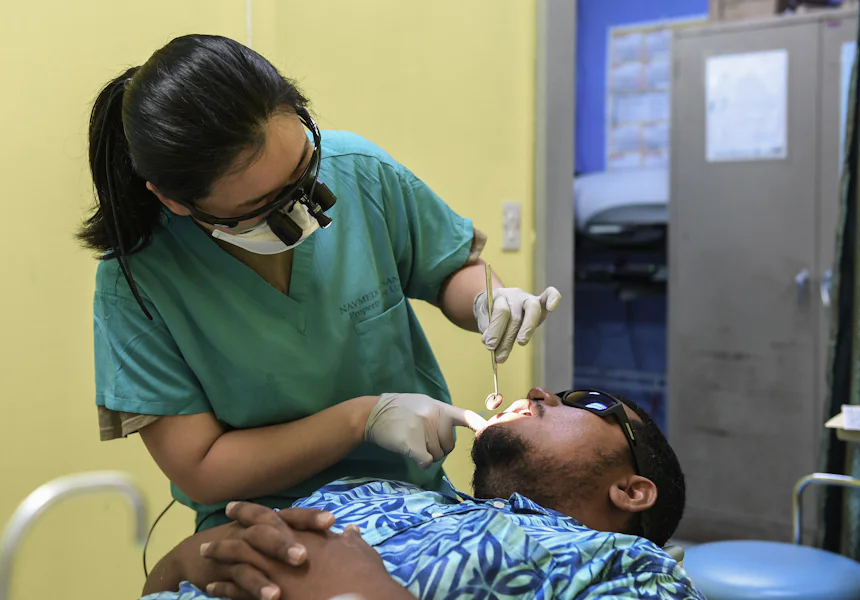
Some patients can benefit from dental school care because licensed faculty supervise students and residents. Others may be eligible for research that examines a dental implant material, bone graft, healing period or prosthetic technique. Neither pathway promises a free treatment plan that meets every patient's preferences. A study might provide only an evaluation, one defined procedure or follow-up appointments, and a university may charge separately for the actual implant components.
You do not need to know whether you need a titanium implant, an overdenture or a fixed bridge before making an initial inquiry. A qualified clinician should assess your oral health, medical conditions and realistic alternatives. If active infection, severe swelling or untreated gum disease is present, ask for appropriate clinical care first. Surgical planning must be individualized, and trials often have their own exclusion criteria.
The National Institute of Dental and Craniofacial Research says that NIDCR does not offer dental implants, conduct clinical trials on dental implants, or provide financial assistance for dental treatment. Ads or messages claiming you can enroll in an NIDCR free implant program are likely fraudulent. Other independent researchers may register dental implant studies on ClinicalTrials.gov; verify the sponsor and study record.
What dental implant research can and cannot provide
Clinical research is designed to answer a scientific question, not to provide routine dentistry to every applicant. An interventional trial may compare materials, procedures or healing approaches under a defined protocol. An observational study may follow people who are already receiving dental implants through ordinary care. That difference matters because taking part in an observational project may not include paid treatment at all.
ClinicalTrials.gov is the U.S. National Library of Medicine's public database for research records. The organization responsible for a study submits information about its design, enrollment criteria, status, locations and contacts. A database listing does not mean the federal government endorses the treatment or pays for the procedure. It is a starting point for verification, not an offer of free implants.
Ask whether the trial supplies an implant post, final crown, abutment, graft, imaging, follow-up visits and management of complications. Some research budgets cover study-required procedures, while routine clinical care or extra treatment remains the participant's responsibility. A legitimate coordinator can explain exactly which costs are covered before informed consent.
Clinical study, teaching clinic or promotional offer?
In a teaching clinic, treatment is part of an accredited educational program under faculty supervision and usually involves a patient fee. In a registered study, treatment or examinations follow a protocol and eligibility is set by researchers. In a private cosmetic discount program, a commercial dental network may reduce the fee at participating offices. Do not substitute one program's terms for another's.
People looking for implant research opportunities often discover observational research or trials involving patients already scheduled for implants. Read the study intervention, recruitment status and cost discussion carefully. The word “implant” in a title does not mean the study gives all eligible volunteers a no-charge surgery and final tooth.
How to find active dental implant and bone-graft studies on ClinicalTrials.gov
Start at ClinicalTrials.gov. Search terms such as “dental implant,” “implant-supported overdenture,” “alveolar bone graft,” “peri-implantitis” or “prosthodontics.” The database lets users filter studies by recruiting status, age and location. Choose “Recruiting and not yet recruiting studies” when you are searching for an opportunity that may still accept patients.
- Search one clear treatment topic.
Use “dental implant” or a clinically relevant term rather than a broad promise such as “free dental surgery.” Narrow your search if unrelated orthopedic implant studies appear.
- Apply the right study-status filter.
Look for recruiting or not-yet-recruiting records rather than completed or terminated studies. A listing's status can lag behind the research site's actual intake.
- Add your location.
Enter a U.S. city, state or ZIP code and select a reasonable travel radius. Implant trials may require repeated follow-up visits, so a distant study can be costly even if one procedure is funded.
- Read the eligibility criteria and NCT number.
Check age limits, required dental anatomy, existing periodontal conditions, medications and the type of study. Record the unique NCT identifier so you can confirm you are discussing the correct protocol.
- Contact the listed research team.
Use only the study record's sponsor or official contact details. Ask whether the listed site is presently recruiting and if a screening visit would create any costs.
- Request the informed-consent details.
Before enrolling, ask about treatment alternatives, foreseeable risks, possible participant expenses, follow-up duties, voluntary withdrawal and where to report a concern.
The official ClinicalTrials.gov patient questions explain how to filter by condition, status and location and how to find an investigator's contact information. If a record has no recruiting contact, it may not be accepting new participants. Do not rely on a third-party lead form promising it can bypass the study coordinator.
What NIDCR research means for someone seeking implants
The National Institute of Dental and Craniofacial Research supports scientific progress in oral health, but its clinical trials information page explicitly states that it does not offer dental implants, conduct clinical trials on dental implants or pay individual dental-treatment costs. This is a crucial distinction from a research study registered by an independent university, hospital or industry investigator.
The official NIDCR clinical trials page includes its own warning about misleading advertisements. If an ad uses a federal logo or the phrase “NIDCR implants for seniors,” check NIDCR's statement before sending any personal information. An official-looking landing page is not proof of a federal program.
Researchers may study bone healing, oral disease, dental materials and other conditions under NIH-funded projects. That broad area of research should not be misrepresented as a public grant that pays for a person's elective implant work. For ordinary low-cost clinical treatment, NIDCR directs patients to dental schools and other appropriate services.
Confirm the NCT identifier, official study sponsor, university or clinic contact, institutional review process, expected visits and the care covered by the protocol. Ask an independent dentist about alternatives before enrolling.
How to find CODA-accredited dental schools and prosthodontic programs
The Commission on Dental Accreditation (CODA) accredits U.S. dental and dental-related education programs. Its official Find a Program directory can be searched by state, city and program type. It includes predoctoral DDS/DMD programs and advanced programs such as prosthodontics, periodontics and oral and maxillofacial surgery.
Use the directory to find an institution, then visit that university's actual patient-care website. A school's existence does not mean it has an open implant service at the student clinic. Some implant patients are evaluated by residents or faculty members rather than predoctoral students. Others may be referred to an advanced specialty practice or declined if the case does not fit the teaching schedule.
When people ask about dental schools that do free implants, they are often looking for the lowest-cost safe route rather than a clinical research intervention. A school can be a promising place to compare fees, but most clinics charge for at least some treatment. Waived fees, charity support or sponsored care are program-specific exceptions, not a guaranteed national benefit.
Which clinic should you contact first?
Start with the general student clinic for an examination or referral. Ask about advanced education in general dentistry (AEGD), prosthodontics and oral surgery if you already have a recommendation for implants. The appointment coordinator can explain whether the school offers implant planning, surgical placement, restorative crown or overdenture services and which provider level performs each stage.
For example, the UCLA School of Dentistry explains that its general student clinics have substantially lower fees than many private practices, while residency clinics provide specialty care with their own pricing. UCLA's Advanced Education in General Dentistry clinic lists implant therapy among its services, but that does not establish universal eligibility or free treatment.
A second example is Penn Dental Medicine, which describes student and postgraduate clinics with faculty supervision. Patients should contact the school directly for current clinical availability and written costs. An academic clinic's published description is more reliable than a third-party directory's claim of a guaranteed opening.
How much can university implant and denture treatment cost?
School clinics often describe their fees as lower than private practice, but it is misleading to promise a universal 50%–70% reduction or a free implant in exchange for student training. Each institution sets fees based on provider level, materials, specialty clinic, surgical complexity and the patient's treatment plan. A quoted percentage may compare unlike services or omit the final restoration.
UCLA's patient information provides a useful example of why fees must be read carefully. Its general clinic has published a separate initial oral examination fee, while resident, faculty and specialty services have other costs. The current amount must be confirmed with the clinic before booking, since university charges can change. A low initial exam price is not the final price for implants.
The overall treatment can include clinical evaluation, radiographs or a CT scan, treatment of active gum disease, extraction, bone grafting, the implant fixture, healing abutment, crown or overdenture, temporary appliance and subsequent visits. Ask for an estimate that clearly identifies the dentist or resident performing each stage and the payment schedule.
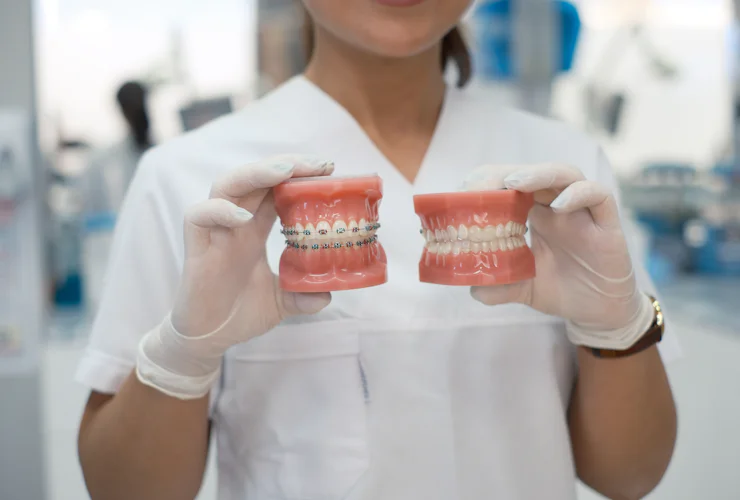
A conventional partial denture can sometimes be an affordable alternative when a person needs chewing support but cannot pay for surgery. An implant-retained overdenture can offer different retention and maintenance characteristics but still requires a surgical evaluation. The clinician should explain the expected benefit, healing, risks and long-term repairs rather than recommending treatment solely because a teaching case is available.
Are “graduation grants” or completely free dentures real?
Specific schools and charities sometimes arrange donated or reduced-fee work through teaching activities, outreach or sponsored programs. However, there is no nationwide student-graduation benefit that guarantees a full denture or implant for every patient. Ask the school's financial office if it currently has an active assistance program and obtain the eligibility requirements in writing.
For a useful comparison, request two written plans when medically reasonable: one for a conventional restoration and one for the proposed implant treatment. Compare what each includes, whether the school will manage future complications and whether the clinic can coordinate available insurance. This gives you a real budget instead of an attractive headline percentage.
Before borrowing for surgery, review the total price and loan terms in our implant cost and financing guide, especially deferred-interest offers.
Compare teaching clinics, clinical research and income-based care
These are different routes to an evaluation, with different clinical and financial rules. The sortable table is not a list of open appointments. Contact the program directly to confirm whether treatment is available for your case and what the patient actually pays.
| CODA-accredited DDS/DMD student clinics | Supervised exams, restorative work and selected prosthodontics | Teaching case selection, clinic availability and clinician examination | School-set reduced fees; not automatically $0 | Screening and multiple visits · CODA |
| Graduate prosthodontics / AEGD clinics | Advanced implant planning, dentures and specialty restorative care where offered | Relevant clinical case and institutional patient intake | Specialist/residency rates; surgery and prosthesis can be separate | Appointment schedule · UCLA example |
| ClinicalTrials.gov registered studies | Study-specific implants, grafts, imaging or observation; no general free implant entitlement | Study-specific age, anatomy, medical criteria, recruitment and location | Protocol-dependent; some care may remain patient-paid | Recruiting status varies · Find studies |
| NIDCR research information | Information about oral research; does not provide implant trials or treatment grants | Not a patient dental implant program | No free NIDCR implant placement program exists | Read fraud warning · NIDCR |
| HRSA-funded health center | Available clinical dental services and potential prosthodontic referrals | Income-based discounts and approved health center dental scope | Full/nominal/partial sliding clinic fees according to rules | Local availability · HRSA locator |
| Donated Dental Services (EIN 84-6129064) | Volunteer-approved donated dentistry; implants not promised | 65+, permanent disability or qualifying medical need plus financial rules | Potential $0 when accepted into volunteer care | State DDS waitlist · DDS |
ClinicalTrials.gov records are submitted by study sponsors; a listing does not verify that a patient will receive implants free of charge. The university may also require separate screening or diagnostic visits.
How to find a free dental clinic near me and check a 25-mile radius
The phrase free dental clinic near me may bring up HRSA-supported health centers, county oral health programs or charity events. A federally supported health center is not necessarily free, and it may offer basic examinations and extractions rather than implants. HRSA explains that it does not pay individuals' dental bills, but some supported clinics provide lower-cost services based on income.
Open the official HRSA Find a Health Center tool. Enter your ZIP code or city and review nearby results. If the locator offers a distance or radius control, choose approximately 25 miles for an initial search; widen the search if no suitable clinics appear. Our website does not calculate driving distances or certify any local center's availability.
Call the clinic and ask whether it has a dental department, offers a new-patient evaluation, accepts your Medicaid or Medicare Advantage dental plan, and uses a sliding-fee discount schedule. Also ask whether it performs dentures, refers for specialist prosthodontics or has any established relationship with a dental school. A low-cost evaluation may help with pain or infection even if surgery must be arranged elsewhere.
The Public Health Service Act, 42 U.S.C. § 254b, authorizes the health center framework. HRSA's sliding-fee compliance guidance describes discounts for patients with qualifying incomes, with full discounts or nominal charges generally at or below 100% of federal poverty guidelines and partial discounts from 100% to 200%. The clinic's approved scope and written policy control the actual fee.
Use the HRSA guide to lower-cost dental care for additional school, clinic and health department pathways. Be sure to call before traveling, since provider listings do not prove that dental services or appointments are available on a particular day.
Create a dental school financial hardship referral request
When calling multiple clinics feels overwhelming, a brief letter can help explain what you need. Our browser-only letter builder organizes your name, the program you wish to approach, the type of concern and a practical impact such as trouble chewing. The generated text can be reviewed, copied and edited before you send it.
This is not a formal medical necessity certificate. A licensed dentist or treating medical professional must provide a clinical diagnosis, imaging interpretation or insurance documentation. Do not claim a clinician has recommended implants if that has not happened. A respectful request for an evaluation or sliding-fee review is more useful than an unsupported promise that a school must provide a free procedure.
Medical necessity & dental school financial hardship request letter
Create an editable letter for a dental school intake office, dentist or agency. It describes your reported practical needs without claiming a diagnosis or certifying medical necessity. A licensed clinician must make clinical determinations.
The letter is generated in your browser without uploading the selections to our server. Share it only through the intended clinic's official intake channel, and avoid including Social Security numbers, medical charts or financial account numbers in a general email.
Clinical trial risks, prerequisites and patient protections
Implant placement and grafting require individualized assessment of oral health, bone condition, smoking history, medicines and healing. Some research protocols exclude certain infections or untreated periodontal problems; others recruit particular clinical populations. It is inaccurate to say every dental study applies the same exclusion rule. Read the criteria of the specific NCT record and talk to a qualified dentist.
Informed consent should explain the study purpose, what is experimental, what is ordinary care, foreseeable risks, expected follow-up, possible benefits and alternatives. The research team should identify whom to contact about injuries, questions or withdrawal. Participating in a study is voluntary, and you should not be pressured to sign on the same day you first see an advertisement.
Ask the coordinator whether research participation affects your usual insurance billing, who pays for a complication, whether extra visits are required and which expenses remain yours. Transport costs, lost work time and care after the study ends can be important even if the protocol supplies one procedure at no charge.
Beware of websites demanding an “enrollment deposit” to reserve a supposedly government-funded implant. Request the actual university or hospital sponsor name and verify the NCT record independently. A legitimate study may have specific screening steps, but there should be a clear explanation of consent and any participant expense.
For facial swelling that affects breathing or swallowing, rapidly spreading infection or other severe symptoms, seek urgent medical care rather than waiting for a trial. A research program is not an emergency dental clinic.
Which option should you try first?
If you need relief from pain or infection, arrange an urgent clinical evaluation at an appropriate dental office or health center. If the immediate need is replacing teeth and cost is the barrier, request a teaching-clinic appointment and a written comparison of conventional and implant-supported restorations. If you meet a nonprofit's specific criteria, you can also explore donated services through the official application process.
If you are interested in participating in research, search ClinicalTrials.gov and contact the study team directly. Keep the NCT identifier, coordinator name and written explanation of cost and follow-up. Do not count a potential clinical trial as an approved treatment plan until the research team has completed screening and informed-consent procedures.
Historical Program Evolution: From 2018–2020 HRSA Oral Health Grants to 2026 Dental Assistance
The April 2018 archive and October 2026 review period are retained to distinguish historical care access from current study recruitment. A trial that enrolled patients in 2021 cannot be presented as an active grant today. University clinic fees and health center service areas also change over time.
| Period | Documented development | Current action |
|---|---|---|
| 2018–2019 research baseline | HRSA health centers, CODA-accredited university teaching clinics and established volunteer dentistry were safety-net options. | Confirm the university is currently accepting the needed type of case. |
| 2020–2022 pandemic clinic limits | Changes in student-clinic schedules and clinical research recruitment affected treatment availability. | Do not mistake historic research recruitment for current intake. |
| 2023–2025 study development | ClinicalTrials.gov continued to catalog university, investigator and industry studies in dental research. | Verify protocol ID, current recruiting status and study location. |
| 2026 research review | NIDCR reaffirmed it does not provide implant trials or financial aid; HRSA directs patients to real clinics. | Use official study contacts and actual institutional cost information. |
Before applying, verify the date of the study record's last update, its recruiting status and the clinic's current contact information. A current ClinicalTrials.gov recruiting status and verified study contact are what determine whether a study can accept applicants, not an advertisement or an old social media post.
Dental school and clinical research FAQs
Where can I find free dental implants clinical trials?
Search ClinicalTrials.gov for recruiting dental implant or bone-graft studies and filter by location. An active research record is not proof that implants are provided at no charge, so verify study expenses with the named coordinator.
Are there dental schools that do free implants?
Some accredited teaching clinics offer reduced-cost implants or have occasional charitable cases, but a nationwide free student implant program does not exist. Ask the university's patient office for actual eligibility rules and a written treatment estimate.
How do I find a free dental clinic near me?
Search the HRSA health center locator using a ZIP code, then call nearby centers to ask about dental services and sliding fees. A health center may offer low-cost examinations or referrals without performing implant surgery.
Does NIDCR run free implant studies?
No. NIDCR explicitly states that it does not offer dental implants, conduct clinical trials on dental implants or provide dental-treatment financial assistance. Be suspicious of advertisements claiming otherwise.
Can dental schools reduce implant costs by 50% to 70%?
Some student and residency clinics charge less than private practices, but no verified percentage applies nationwide. The fee depends on the university, treatment, provider level and whether implants, grafts and final prosthetics are separately charged.
How do I verify a CODA-accredited clinic?
Use the Commission on Dental Accreditation's official program directory to find accredited dental and advanced training programs. Then verify patient appointment availability and the specialty services offered with the university itself.
What if an implant research study rejects my application?
Research eligibility follows the specific protocol, including clinical and medical criteria. Ask a licensed dentist about ordinary treatment alternatives, charity eligibility or an affordable teaching-clinic examination rather than repeatedly submitting inaccurate screening answers.
Can a dental school hardship letter certify medical necessity?
A patient-written letter can explain practical problems and request an evaluation or financial screening. It cannot replace a licensed practitioner's clinical diagnosis, insurer documentation or the school's formal intake review.
Primary sources for dental schools and study recruitment
Use direct government, academic and accreditor sources. None of these portals guarantees a treatment appointment or a free implant procedure.
- NIDCR clinical trials, including the official warning that NIDCR does not offer implant trials or treatment assistance.
- ClinicalTrials.gov patient FAQ, recruiting filters, location search and study contacts.
- CODA accreditation and program finder.
- HRSA: finding low-cost dental care, university and health center options.
- UCLA School of Dentistry: provider levels and fees.
- Penn Dental Medicine teaching clinic information.