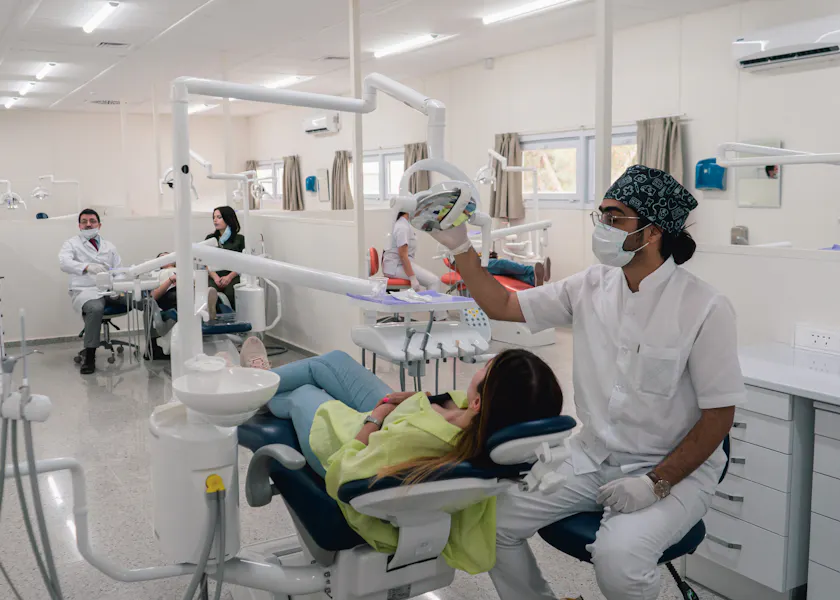
A single parent who needs an affordable denture and a survivor with front teeth damaged by violence may face similar dental bills, but their assistance routes are not the same. Our main dental assistance resource compares public and charitable care, while the dental grants application page explains Donated Dental Services and commercial fee reductions. This guide focuses on family Medicaid coverage, a specialized survivor charity, and employment-related support that may exist in particular states.
Searching for free dental grants for single mothers can produce websites that advertise a guaranteed government payment for implants. No general federal program sends unrestricted implant cash to everyone who is raising children alone. More practical routes include an adult Medicaid dental benefit when the state covers the procedure, a federally supported health center's sliding-fee services, a university clinic or help from a qualified local charity.
The survivor route is different: it may address physical dental injuries connected with a particular experience, subject to privacy-conscious eligibility screening. A person does not need to describe a traumatic event on this website to learn the basics. Only the nonprofit's own protected application should be used for whatever information its current rules require.
For a routine dental need, check insurance and a local clinic. For a qualifying injury from a former intimate partner or sexual violence, review the official survivor restoration criteria. For immediate danger, safety comes before any dental grant application.
Give Back a Smile: when the AACD Charitable Foundation can help
The American Academy of Cosmetic Dentistry Charitable Foundation operates a volunteer dental restoration program known as GBAS. The foundation is a 501(c)(3) charity with EIN 39-1800450, identifiable through its official nonprofit disclosures. It connects certain adult survivors of intimate partner and sexual violence with volunteer cosmetic dentists when eligible front-tooth injuries resulted from the qualifying event.
The important limitation is specific: the program is primarily designed to restore front teeth damaged, broken or lost because of abuse or sexual assault. It is not a general free implant program for all survivors, nor is it a routine dental treatment fund for cavities, ordinary tooth loss, untreated gum disease or missing back teeth unrelated to the injury.
The charity's current application and requirements page says applicants should be adults, have untreated qualifying dental injuries, have been out of abusive relationships or situations for at least one year, have a support person or organization, and be able to attend several appointments. It also discusses transportation availability, potentially up to 200 miles, and other criteria intended to make ongoing care feasible.
These rules belong to one charity, not a judgment about anyone's experience. People who are unsafe or ineligible for GBAS can still seek emergency care, Medicaid and lower-cost clinics.
Is the dental treatment fully donated?
When a volunteer dentist accepts a case, the dental services that dentist agrees to donate may be provided without the normal private treatment charge. However, the clinician determines what procedures are feasible. The official program explicitly states that implants are not standard treatment, and no applicant is guaranteed a complete implant restoration or any specific prosthesis.
The charity's publicly posted volunteer-dentist guidance also mentions a $20 application fee. Since fee rules can change and the current consumer application may present its own terms, check the official portal for any amount actually requested before submitting. Our directory itself does not collect an application fee or process donations for this charity. Never pay an unrelated person who claims they can move an applicant ahead of the volunteer list.
Someone seeking domestic violence free dental implants may be better served by learning the charity's specific injury restrictions, rather than by responding to advertisements offering unlimited cosmetic surgeries. A bridge, crown or removable restoration may be more appropriate if the volunteer dentist cannot place implants. The actual treatment should be explained during the formal dental consultation.
How the GBAS survivor dental application process works
The official site directs applicants to its own online form. The charity generally reviews submitted applications and states that an applicant should receive an email regarding status within approximately 60 days. A favorable initial review may lead to a call with a case manager and, if an appropriate volunteer is available, instructions for a consultation. Preapproval is not acceptance into treatment.
- Read the complete eligibility statements before applying.
Check the adult age requirement, qualifying front-tooth injury, elapsed time and support criteria. If the program does not match your circumstances, another charity or clinic may be more appropriate.
- Use the official secure application portal.
Open the nonprofit's website directly rather than a social media referral or a lookalike domain. Provide sensitive details only where the organization actually requests them and has explained its privacy practices.
- Wait for the program's documented response.
Keep a copy of the official submission confirmation in a safe place. The public guidance describes an email decision or update within around 60 days, not a guaranteed appointment or fixed start date.
- Discuss availability with the case manager if preapproved.
The program may look for a suitable volunteer dentist near you. Travel requirements and provider capacity vary, and an available clinician may not be able to offer the procedure you had originally hoped for.
- Attend the dental consultation when it is offered.
The dentist evaluates oral health, the qualifying injury, possible treatment and clinical risks. A preliminary referral does not obligate a dentist to provide an implant or any particular restoration.
- Confirm the agreed treatment and remaining responsibilities.
Ask about the procedure, number of visits, healing, follow-up and any costs or logistics not included. Only proceed when you understand the care plan and feel able to consent.
It can be helpful to work with a trusted advocate or caseworker when organizing an application, especially if transportation, childcare or safe communications are difficult. A survivor should be able to choose a safe email address, phone number and time for contact. If other people monitor their devices or messages, the official domestic violence hotline has technology-safety resources that can help them plan how to reach support.
Medicaid dental benefits during pregnancy and the postpartum period
Pregnancy can be a period when people become newly eligible for Medicaid or receive expanded health coverage. The key is to separate continuous insurance eligibility from which adult dental procedures the insurance covers. Medicaid states decide the scope of adult dental services, and receiving pregnancy-related Medicaid does not automatically mean implant surgery, dentures or cosmetic work is included.
Under the American Rescue Plan Act of 2021, states were given the option to extend Medicaid and CHIP postpartum coverage from roughly 60 days to 12 months. The Consolidated Appropriations Act of 2023 made the extended postpartum coverage option permanent, though state adoption and the scope of adult dental benefits remain separate questions. CMS maintains a current state-by-state list on its postpartum coverage resource. Whether a particular state has adopted the option and which services are covered must still be checked.
Pregnancy dental care may include examinations, cleanings, treatment of infection, fillings, extractions or other services depending on the state and individual coverage. For example, MassHealth identifies preventive and restorative dental services among care available to eligible pregnant and postpartum members, but that Massachusetts example is not a national promise of implant coverage. Always check the state's own Medicaid member handbook and the dental plan's participating provider list.
Questions to ask a Medicaid dental plan
Ask whether pregnancy or postpartum status changes adult dental benefits, whether your plan covers treatment of gum infections or tooth decay, and whether dentures or root canals require authorization. Also ask whether coverage continues after the pregnancy ends and when any reassessment of eligibility is expected. If the plan says a service is excluded, request written confirmation and ask about a clinically suitable covered alternative.
Pregnant patients should not defer necessary treatment solely out of fear. A dentist and pregnancy care provider can coordinate a clinically appropriate plan. Individual medical factors, medications and any procedure requiring sedation need professional assessment, but untreated severe infection can also pose a risk.
If a mother is enrolled in Medicaid, children may also have their own oral health benefits. Medicaid children's dental services are required through the Early and Periodic Screening, Diagnostic and Treatment benefit, or EPSDT, while adult dental coverage remains state-specific. A child's covered checkup does not transfer the same benefit automatically to the parent.
For missing teeth after pregnancy or a lost appliance, compare state Medicaid denture benefits with community clinics. A lower-cost partial or conventional denture may be a practical step before elective implant discussions.
TANF, county aid and vocational rehabilitation: possible employment help
Temporary Assistance for Needy Families, or TANF, is a federally funded program administered by states and sometimes tribal governments. It can help eligible families meet basic needs and, in many states, connect parents with employment-related support, childcare, transportation or training. HHS explains that each state decides program design, benefit levels and the services it provides.
Some websites advertise TANF dental vouchers as if every county gives a parent money for implants to prepare for job interviews. That is not a nationwide TANF entitlement. A local caseworker may know of nonrecurring assistance, a community-funded dental referral or support services relevant to a documented work barrier, but the existence, eligibility and funding must be confirmed with the actual state or county office.
If missing teeth, untreated pain or facial injury is interfering with attendance at training or work, explain the practical problem to your authorized TANF employment specialist. Ask whether the state has any current supportive service for a clinically necessary dental evaluation, transportation to a dental clinic, or referral to an appropriate provider. Do not assume routine cosmetic implants are covered because you have a work-search requirement.
The official USAGov TANF overview and HHS explanation describe the state-administered system. Contact your own state's agency for the actual rules, including whether documentation of financial hardship or participation in a work plan is required.
Vocational rehabilitation can be a separate path
A person with a qualifying disability who is working toward an employment goal may be eligible for state vocational rehabilitation (VR) services. Federal VR law at 29 U.S.C. § 723 and 34 CFR § 361.5 recognizes physical and mental restoration services, including dentistry, when appropriate. The service generally needs to address a substantial employment barrier and fit an approved individualized plan.
A VR counselor must approve any treatment under state rules; implants and cosmetic work are not automatic benefits.
Survivor dental restoration, Medicaid and family assistance options
This comparison distinguishes donated clinical work from state insurance and general family assistance. The sortable table does not mean any charity is accepting new patients in your area. Verify the exact benefit and official portal before sending personal information.
| AACD Charitable Foundation / GBAS (EIN 39-1800450) | Volunteer-selected restorative work for eligible front-tooth injuries; implants nonstandard | Adult with qualifying violence-related front-tooth injury and other official requirements | Donated treatment when accepted; ask about any application charge | Application review around 60 days · GBAS application |
| State Medicaid during pregnancy/postpartum | State-covered exams, infection care and selected restorative services | Medicaid eligibility and current state adult dental benefit; 12-month postpartum where adopted | Varies by state plan and coverage | Plan enrollment/prior approval · CMS postpartum |
| State Medicaid adult dental | Potential covered fillings, extractions, dentures; implant coverage not implied | State Medicaid enrollment, dental plan, eligibility and service codes | State/plan copays or exclusions | Plan rules and appointments · Medicaid dental |
| TANF state or county services | Potential employment/basic-needs support, referrals; no universal implant voucher | Family eligibility, local TANF/tribal rules and approved work plan | Service-specific; dental funding is not promised | Caseworker decision · USAGov TANF |
| State vocational rehabilitation | Employment-related physical restoration, sometimes dentistry | Disability, qualified work barrier and individual employment plan | As approved by state VR; not cosmetic grant | Counselor review · Federal VR law |
| HRSA-supported health center | Adult dental treatment within local approved scope and possible referrals | Income-based discount class and clinic dental services | Nominal/partial clinic fee according to written schedule | Clinic screening · HRSA locator |
| University dental teaching clinic | Supervised dental evaluation, restorations and dentures where offered | School intake, treatment need and teaching case acceptance | School-defined reduced fees; not necessarily $0 | Appointment and multiple visits · CODA directory |
| Dental Lifeline Network DDS (EIN 84-6129064) | Donated comprehensive care selected by volunteers, not universal implants | 65+, permanently disabled or medically necessary criteria plus hardship | Potential $0 if accepted | State waiting list · DDS application |
A program that supports household essentials or employment does not necessarily have a dental implant budget. Read the actual approved services and ask for an itemized treatment estimate.
Charity dentists, HRSA clinics and university programs for parents
Dental Lifeline Network's Donated Dental Services program (DDS, EIN 84-6129064) coordinates volunteer comprehensive dentistry for certain older adults, permanently disabled people and applicants with medically necessary dental needs. A younger single parent does not qualify simply because they have children. The applicant must meet a qualifying category, demonstrate financial need and exhaust applicable insurance benefits. Its volunteer dentists choose which care they can donate, and implants may not be available.
HRSA-funded health centers operate under the federal health center framework in 42 U.S.C. § 254b. Participating clinics may offer dental examinations and basic treatment with sliding-fee discounts to people who meet household-income criteria. The actual dental services offered depend on the center's scope. A clinic may treat infection or decay without providing implant placement or prosthodontics on site.
Use the HRSA Find a Health Center locator and ask whether the clinic offers adult dental appointments, a sliding-fee screening and any referrals for dentures or restorative care. Bring the information requested by the official clinic; our public directory does not need a Medicaid card, EBT PIN, SSN or a personal history of violence.
Accredited university dental schools may charge lower fees for supervised student treatment or specialty resident care. Some may offer payment arrangements or occasional assistance through their own program, but there is no guaranteed national free implant placement for every qualifying family. A low-cost evaluation and a written comparison of a bridge, partial denture and implant-supported treatment can be useful before committing to a costly plan.
Protecting privacy while looking for dental assistance
People leaving a controlling relationship may need to be cautious about messages, shared devices, travel and visible account activity. A dental directory should never demand an account of abuse in order to display public program information. If you choose to apply for a dedicated survivor restoration charity, review its privacy notice and consider what email address, telephone number and callback method are safe for you.
The National Domestic Violence Hotline offers confidential support by phone at 800-799-7233 and text by sending START to 88788. It can connect people with safety planning and local resources; it does not directly fund implants or pay individual dental bills. The hotline warns that internet use may be monitored, and its technology-safety advice may help visitors decide how to browse or communicate.
For a life-threatening emergency or immediate danger, call 911 where available. For a dental infection or severe swelling, seek a qualified medical or dental assessment according to urgency. A person can ask about urgent care without deciding whether they are ready to begin a longer restorative treatment process.
Never send an SSN, financial account number, photographs of injuries or records about abuse through a general dental help form. If an official charity later requires evidence, submit only what it requests through its authorized channel. If someone claims to be a dental grant agent and demands a release fee or bank PIN, do not provide it.
Supportive questions you can ask without recounting trauma
Ask an intake office whether it can receive a private callback, whether it offers an advocate or case manager, and whether the person receiving care can bring a trusted support person. Ask about transportation help, appointment timing, interpreters and what will appear on insurance statements. These practical details can matter as much as the quoted price.
See possible family and charitable dental care routes
The browser-only tool below compares broad patient category, current coverage and dental need to educational pathways. It does not collect a personal story, approve a benefit or contact a charity on your behalf. Select only what you feel comfortable sharing with your own device; no account information or identifying records are required.
A program suggestion is not official eligibility. Use the listed organization or agency's own protected intake channel before making any medical or financial decisions.
Plan a dental appointment around real treatment and family expenses
Even a reduced-cost procedure can involve travel, childcare, time away from work, X-rays, extractions or later dental adjustments. Request an estimate that separates the urgent oral health problem from the preferred elective restoration. The same patient may be eligible for inexpensive infection care today but need a longer referral process for a denture or implant.
If a clinic offers financing, check the total cost, annual percentage rate, payment length and any deferred-interest conditions. Do not commit to an expensive treatment plan because a salesperson says an unspecified federal grant will reimburse you. A provider should identify what Medicaid or an actual charity covers before the patient signs a loan agreement.
For domestic violence free dental implants searches, the same caution applies. A person's eligibility for a specialized survivor charity depends on its injury and safety requirements, not on a broad keyword. Outside that charity, public insurance and community clinics follow their normal coverage and clinical rules.
Historical Program Evolution: From 2018–2020 HRSA Oral Health Grants to 2026 Dental Assistance
The April 2018 research baseline and October 2026 review period preserve historical context, including the longer-term volunteer restoration program and changes in pregnancy-related Medicaid continuity. Older advertisements or pandemic-era aid arrangements should not be assumed to remain available.
| Period | Historical development | Current verification |
|---|---|---|
| 2018–2019 baseline | HRSA clinics and a long-running AACD Foundation survivor restoration program were established care pathways. | Verify present charity injury eligibility and clinic scope. |
| 2020–2022 emergency and postpartum changes | Dental clinic access shifted during the pandemic; the 2021 American Rescue Plan introduced an extended postpartum Medicaid option beginning in 2022. | Separate old emergency policies from current state coverage. |
| 2023–2025 coverage and program updates | The 2023 appropriations law made the 12-month postpartum option permanent; state adult dental benefits and nonprofit intake continued changing. | Check the state adoption map and current adult dental code coverage. |
| 2026 clinical resource audit | Review of GBAS volunteer rules, Medicaid dental coverage, TANF state discretion and VR support pathways. | Confirm live nonprofit screening, privacy and exact local assistance. |
Rules and clinic capacity can change after a review date. Confirm current eligibility, benefit limits, charity screening, privacy procedures and actual appointment availability directly with the organization in the year you seek treatment.
Family Medicaid and survivor dental assistance FAQs
Are free dental grants for single mothers available from the federal government?
No nationwide federal cash grant automatically pays for elective implants just because a parent is raising children alone. State Medicaid dental benefits, sliding-fee health centers and particular charitable programs may offer practical assistance.
What injuries may qualify for the AACD survivor dental program?
The GBAS program focuses on qualifying front teeth damaged, lost or broken due to a former intimate partner or sexual violence. Applicants must meet additional requirements, and volunteer dentists choose which treatment they can provide.
Are domestic violence free dental implants guaranteed?
No. The specialized survivor charity states that implants are not standard treatment and cannot promise the exact restoration an applicant wants. Other dental and health programs also use individual eligibility and clinical rules.
How long does the survivor charity review an application?
The published application guidance describes receiving a status email around 60 days after review. Preapproval may lead to case-manager contact and a volunteer consultation, but it is not a guaranteed appointment or treatment commitment.
Does a 12-month postpartum Medicaid extension include all dental treatment?
No. Extended postpartum eligibility can keep a person enrolled longer, but each state sets its covered adult dental services and any restrictions. Routine implants and cosmetic work should never be assumed covered without a plan determination.
Can TANF pay for a single parent's dental implants?
TANF is state-administered and has no universal implant voucher benefit. A local caseworker may explain approved support services or community referrals, but any dental payment must be confirmed under that particular program.
Can a state vocational rehabilitation agency help with dental needs?
Federal VR rules include dentistry among possible physical restoration services connected with a qualified employment goal. A counselor and individualized employment plan determine whether the service is appropriate, rather than a general cosmetic grant application.
What is a safe way for a survivor to ask about dental care?
Use an official nonprofit or clinic contact method and choose a safe phone or email address. Do not submit an abuse narrative, identification number or private health records to a general directory; the National Domestic Violence Hotline also offers confidential safety planning.
Official organizations and policies used in this research
These sources can explain eligibility and current contact details. A public information link does not confirm an individual is approved for care.
- AACD Charitable Foundation: official GBAS application criteria, adult survivor injury and volunteer provider requirements.
- AACD Charitable Foundation: volunteer dentist guidance, scope of restorative care and published fee information.
- CMS Medicaid: postpartum coverage extension, state participation and continuity rules.
- Medicaid.gov: adult versus child dental benefits.
- HHS: state TANF program authority and USAGov benefits assistance.
- 34 CFR § 361.5: vocational rehabilitation definitions.
- National Domestic Violence Hotline: safety and local referrals.